
Walk into any serious peptide research lab and ask the lead scientist what keeps them up at night. Nine times out of ten, it won't be the experimental design or the data analysis. It'll be the quality of their starting material. And when the compound in question is AOD 9604 peptide, that concern about quality — specifically, purity — becomes the single most important variable before the experiment even begins.
This post is for researchers, lab managers, and science-focused buyers who want to understand why purity thresholds aren't just a marketing number. It's also for anyone evaluating AOD 9604 peptide for sale and trying to figure out what separates a legitimate research-grade compound from one that will compromise your results before you run a single trial.
Let's get into it.
What Is AOD 9604 and Why Are Researchers Studying It?
AOD 9604 is a synthetic peptide fragment derived from the C-terminus of human growth hormone (hGH). Specifically, it corresponds to amino acids 176–191 of the hGH sequence — hence why it's sometimes referred to in literature as hGH frag 176–191.
What makes it stand out in a research context is its selective interaction with fat metabolism pathways. Unlike full-length growth hormone, AOD 9604 doesn't appear to significantly affect insulin-like growth factor 1 (IGF-1) levels, which makes it a cleaner research tool for isolating and studying lipid metabolism mechanisms.
Research interest has centered on:
How the peptide interacts with beta-3 adrenergic receptors
Its potential role in lipolysis (fat breakdown) signaling
Comparative studies against full-length hGH fragments
Metabolic research modeling in controlled laboratory environments
It's a 16-amino-acid synthetic peptide — compact, structurally defined, and highly sensitive to impurities. That last point is where the purity conversation becomes impossible to ignore.
Why >99% Purity Isn't a Sales Pitch — It's a Research Requirement
Here's something that doesn't get said clearly enough in supplier catalogs: when you're working with a short synthetic peptide like AOD 9604, even a 2–3% impurity load can meaningfully alter your experimental outcomes.
Here's why.
Short peptides are structurally unforgiving. At 16 amino acids, AOD 9604 doesn't have the structural complexity that larger proteins use to "buffer" the effects of minor contamination. A truncated sequence, a missed coupling step during synthesis, or residual reagents from solid-phase synthesis (SPPS) can produce a compound that looks similar on paper but behaves differently in a biological assay.
Impurities compete for receptor binding. In receptor-binding studies, any closely related peptide fragment present as a contaminant will compete with your target compound for the same binding sites. Your dose-response curve becomes unreliable. Your IC50 values shift. Your conclusions are compromised — and you may not even realize it until you try to replicate the study.
Downstream assays amplify contamination effects. Techniques like mass spectrometry, HPLC-based quantification, and cell-based functional assays are sensitive enough to detect and respond to impurities that would seem negligible at first glance. A 98% pure compound introduces more noise into these systems than researchers typically account for.
The 99%+ threshold isn't arbitrary. It's the point at which a synthetic peptide is clean enough to produce reproducible, trustworthy data in standard research workflows.
What to Look For When Evaluating AOD 9604 Purity
If you're assessing sources of AOD 9604 peptide for sale, the purity claim on a product page means nothing without documentation to back it up. Here's what that documentation should include:
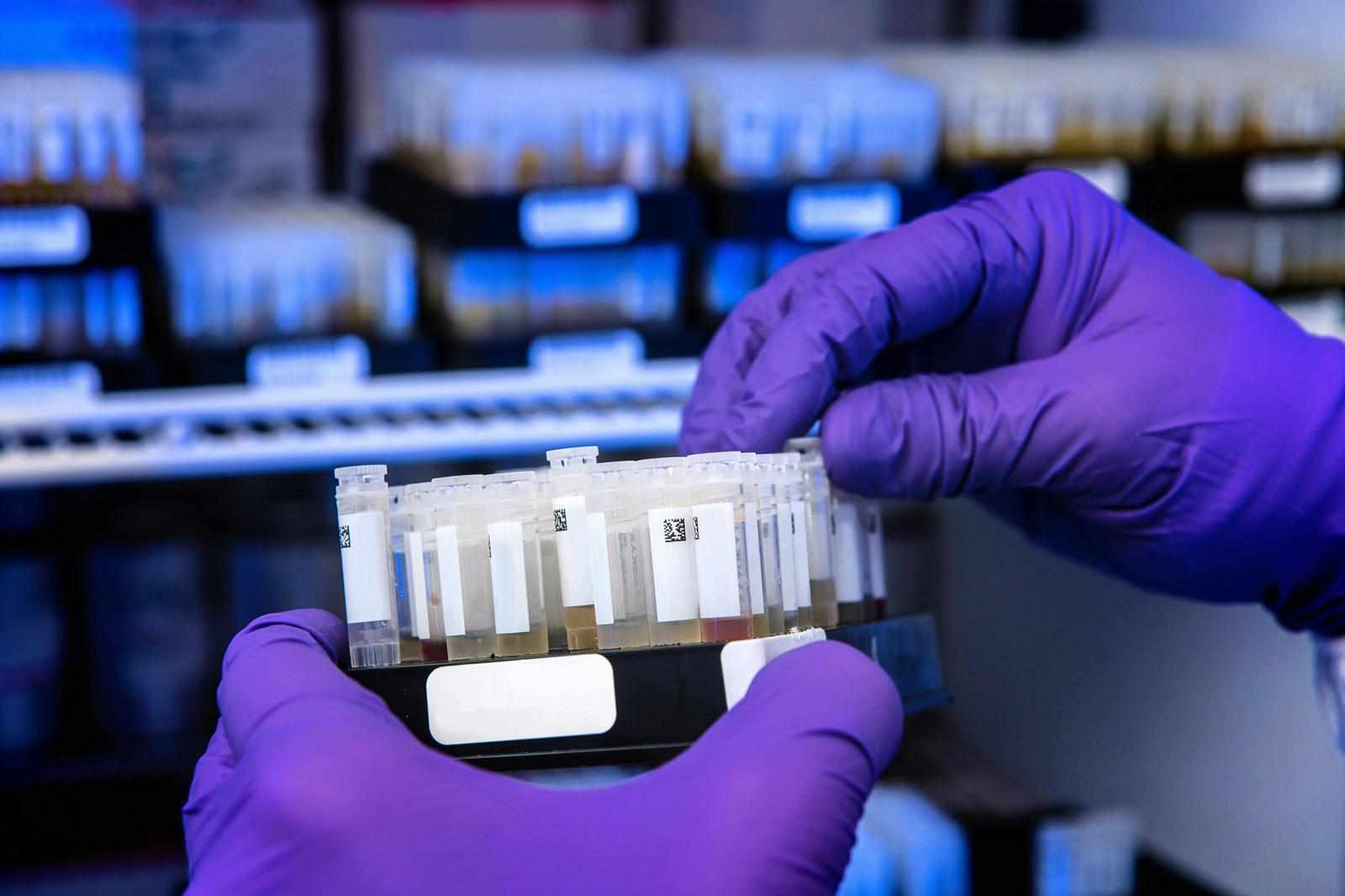
HPLC Chromatogram High-performance liquid chromatography is the industry standard for measuring peptide purity. The chromatogram should show a dominant, clean peak for your compound with minimal or no satellite peaks. Ask for this before purchasing.
Mass Spectrometry Confirmation MS data confirms that the compound has the correct molecular weight — meaning the right amino acid sequence was actually synthesized. Purity and identity are two different things, and you need verification of both.
Certificate of Analysis (CoA) A proper CoA will state the lot number, synthesis date, measured purity percentage, molecular weight, and storage conditions. It should come from a third-party or in-house analytical lab — not just be a number printed on a label.
Counterion and Water Content Lyophilized peptides contain residual water and counterions (often trifluoroacetate from SPPS). These affect actual peptide content by weight. A transparent supplier will account for this in their documentation.
If a supplier can't or won't provide any of the above — move on.
Understanding AOD 9604 Cost in Research Budgeting
Let's talk honestly about AOD 9604 cost, because it's one of the first things lab purchasing teams look at — and sometimes the only thing, which is a mistake.
Research-grade AOD 9604 at verified >99% purity will cost more than a lower-purity alternative. That price gap reflects real costs: advanced synthesis protocols, multiple rounds of analytical testing, proper lyophilization, and cold-chain handling and storage.
Here's the practical math: if a cheaper compound produces inconsistent results, you'll repeat experiments. You'll consume more material. You'll spend more researcher time troubleshooting data that should have been clean from the start. The lower-cost option almost always ends up costing more — measured in time, materials, and delayed research timelines.
When evaluating AOD 9604 cost, frame it this way: what is the cost of one failed experimental run? What is the cost of having to re-run a study because your starting material was suspect? In most lab environments, a single failed experiment costs far more than the price difference between 97% and 99%+ purity material.
Buy on quality first. Then evaluate price within that quality tier.
Storage and Handling: Protecting Purity After Purchase
Even a 99.5% pure peptide degrades into something far less useful if it's stored or handled incorrectly. For AOD 9604 specifically:
Before reconstitution: Store lyophilized powder at -20°C or colder, away from light and moisture. In this form, the compound is stable for extended periods.
After reconstitution: Use sterile water or an appropriate buffer. Once dissolved, aliquot into single-use volumes to avoid repeated freeze-thaw cycles, which break down peptide bonds and generate degradation products — new impurities created after purchase.
Working stock: Keep at 4°C and use within 48–72 hours unless your protocol specifies otherwise. Don't assume stability beyond what your compound's documentation states.
Every degree of carelessness at the handling stage undoes the work that went into producing a high-purity compound in the first place.
Frequently Asked Questions
1: What does AOD 9604 stand for? A: AOD stands for "Anti-Obesity Drug," reflecting its early research focus on fat metabolism. The 9604 designation refers to its compound identification number. It corresponds to amino acid fragment 176–191 of human growth hormone.
2: Why is AOD 9604 only available for research use? A: AOD 9604 has not received regulatory approval (such as FDA clearance) for human clinical use in most jurisdictions. It is therefore available strictly as a research compound for use in qualified laboratory settings. Any use outside of controlled research is outside the intended and legal scope of its supply.
3: What is a realistic purity threshold for AOD 9604 used in cell-based assays? A: For cell-based and receptor-binding assays, 98% is often cited as a functional minimum — but 99%+ is the preferred standard. The cleaner the compound, the more reliable your dose-response relationships will be. For any publication-level research, 99%+ should be treated as non-negotiable.
4: How does AOD 9604 cost compare to other synthetic peptide fragments of similar length? A: It sits in the mid-to-upper range for 16-amino-acid synthetic peptides, largely because of the analytical rigor required to achieve and verify high purity. Suppliers who offer it at significantly lower prices than the market average are almost certainly cutting corners on testing, synthesis quality, or both.
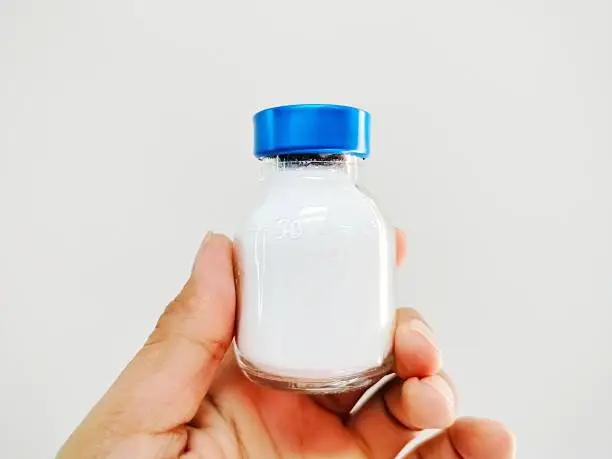
5: Can I visually inspect the purity of AOD 9604 when I receive it? A: No. Purity cannot be determined by visual inspection of lyophilized peptide. A white powder at 95% purity looks identical to one at 99.5% purity. This is why third-party analytical documentation is essential — your eyes can't do what an HPLC system can.
6: What are the most common impurities found in lower-quality AOD 9604? A: The most common are deletion sequences (peptides where one or more amino acids were skipped during synthesis), truncated fragments, and residual synthesis reagents such as trifluoroacetic acid (TFA). All of these can interfere with biological activity and assay accuracy.
7: How should I reconstitute AOD 9604 for use in a laboratory setting? A: Typical reconstitution uses sterile water or bacteriostatic water, depending on your protocol. Allow the lyophilized powder to come to room temperature before opening the vial to prevent moisture condensation on the powder. Add solvent slowly and swirl gently — never vortex, as aggressive agitation can damage peptide structure.
The Bottom Line
In peptide research, quality at the source determines quality at every step that follows. When it comes to AOD 9604 peptide, that means treating the 99%+ purity threshold not as a premium option but as the baseline standard for any experiment worth running.
If you're currently evaluating sources of AOD 9604 peptide for sale — look past the price tag first. Demand the documentation. Verify the purity method. Understand what you're actually purchasing. And factor true AOD 9604 cost into your budget by accounting for what low-quality material actually costs in failed runs and wasted time.
Research built on clean starting material stands up. Research built on "close enough" doesn't — and the data always shows it eventually.
This article is for informational and educational purposes only. All compounds referenced are intended strictly for laboratory research use. They are not approved for human consumption, clinical application, or veterinary use. Researchers are responsible for compliance with all applicable regulations in their jurisdiction.


Write a comment ...